
Munitions Modernization: The Family of Drone Munitions
Presentation: Loitering Munitions USA

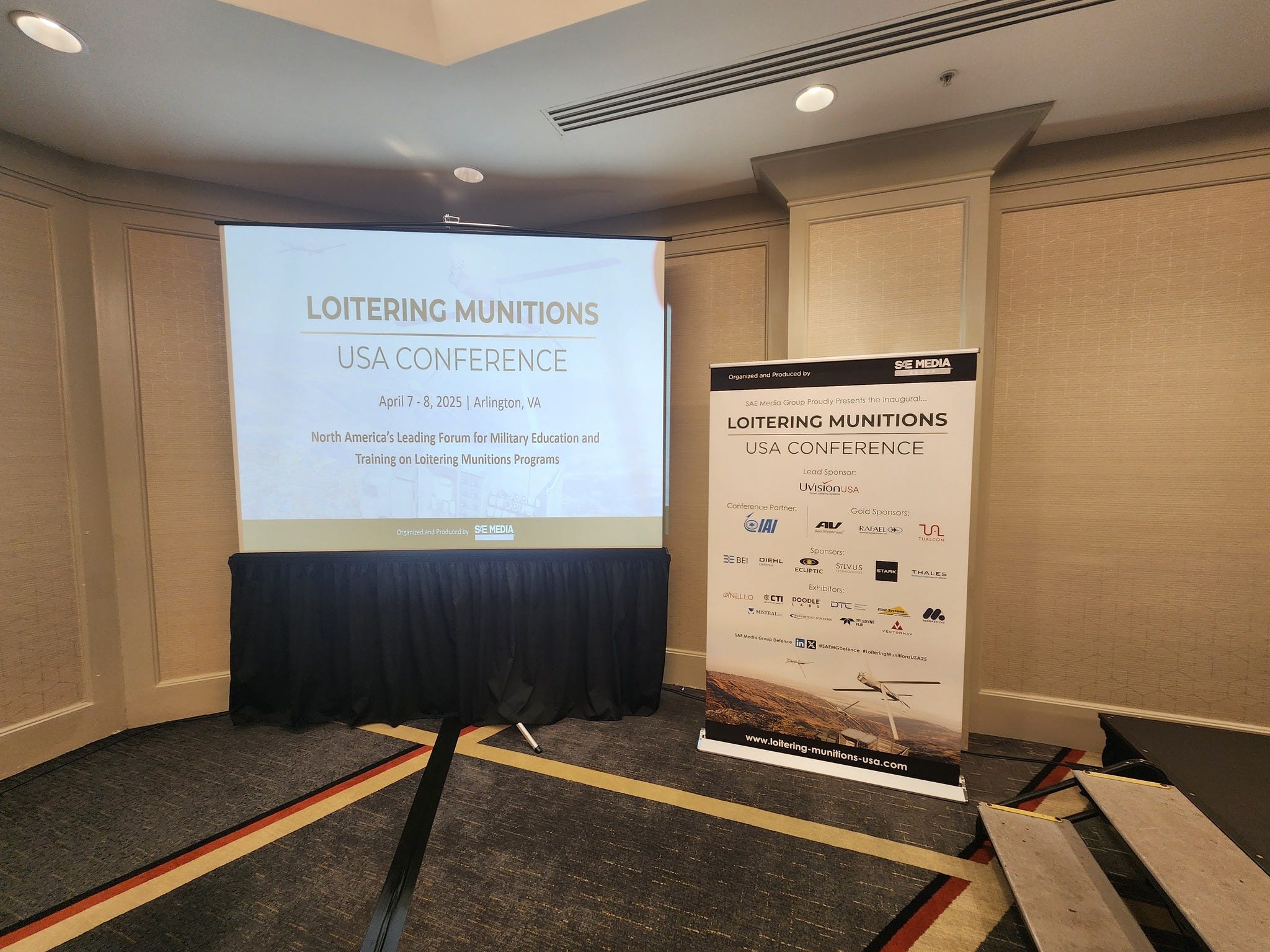
Good afternoon, everyone. Before I begin, the views presented are my own and do not necessarily represent the views of DoD or its components. Welcome to the closing session of Loitering Munitions USA.
Today, I'd like to discuss the critical topic of modernizing drone munitions. Drones, or Unmanned Aircraft Systems (UAS), are no longer a futuristic concept; they are a vital and evolving component of modern combat operations. Their effectiveness hinges not only on the platform itself, but crucially on the munitions they carry. We must ensure these systems are equipped with the right tools to achieve mission success.
A key driver in the drone modernization effort is the Replicator Initiative. This program represents a paradigm shift, focusing on accelerated development and delivery of critical capabilities with operational impact. It's about getting drone technology into the hands of the warfighter rapidly and at scale. Specifically, Replicator aims to deliver all-domain attritable autonomous systems, which must include advanced drone munitions. A needed push to not just build drones, but to equip them with smart, adaptable, and cost-effective weaponry.
The landscape of drone operations is diverse and varied. We have drones designed for intelligence, surveillance, and reconnaissance on the battlefield. Others are purpose-built for direct action, requiring a different suite of munitions. The challenge lies in matching the right munition to the specific drone and its intended mission. A small, tactical drone might require lightweight, precision-dropped munitions, while a larger, more strategic platform could utilize a heavier, longer-range weapon. This tailored approach is crucial for maximizing effectiveness and minimizing unintended consequences.
Munitions Modernization can be pursued through a multi-pronged approach. One approach is to adapt existing munitions for drone deployment. This leverages proven technology; however, the integration process needs to be streamlined. Another area of exploration is 3D printing. This offers the potential to create custom munition bodies and components, allowing for rapid prototyping and tailoring to specific drone platforms. Beyond adapting existing weapons, the Army must invest in developing entirely new, drone-specific munitions. These could include munitions for drone dropping, firing, and loitering operations, as well as other innovative solutions designed to leverage the unique capabilities of small unmanned systems.
Now, as we look to transform existing capabilities with the advent of these new systems, Army senior leaders will insist on a thorough analysis of the institution’s preparedness. This analysis must fully integrate and capitalize on new systems, utilizing the DOTMLPF-P framework – Doctrine, Organization, Training, Material, Leadership and Education, Personnel, Facilities, and Policy. This systematic approach will compel the institutional army to analyze how it can innovatively integrate new systems to foster definitive shifts in the character of war. We cannot simply introduce new technology without considering the broader implications for how we fight, train, and sustain our forces.
This modernization effort is far more than just developing new hardware; it demands a holistic approach mirroring the Army's broader modernization strategy. It requires sustained investment in research and development to push the boundaries of munitions technology, aligning with other common munitions programs and other efforts focused on increased lethality, range, and precision. We must also prioritize training our personnel on the proper employment and maintenance of these advanced systems, integrating them into realistic training scenarios and leveraging simulations to maximize proficiency. This includes not only the operators themselves, but also the maintainers and support personnel who ensure these systems are ready for combat. Crucially, we need to collaborate closely with our partners, both within and outside the Department of Defense (DoD), including organizations such as the Joint Program Executive Office for Armaments & Ammunition (JPEO A&A) and Combat Capabilities Development Command (DEVCOM), and Army Test and Evaluation Command (ATEC) as well as with industry partners, to ensure interoperability and accelerate the development cycle. A collaborative ecosystem, fostering open communication and shared goals, is crucial for keeping up with battlefield innovation and ensuring drone munitions remain a decisive advantage in modern warfare.
By investing in this critical area and adhering to rigorous analysis, we can ensure that our drones are equipped with the best munitions for the future battlefield.
Slide 1
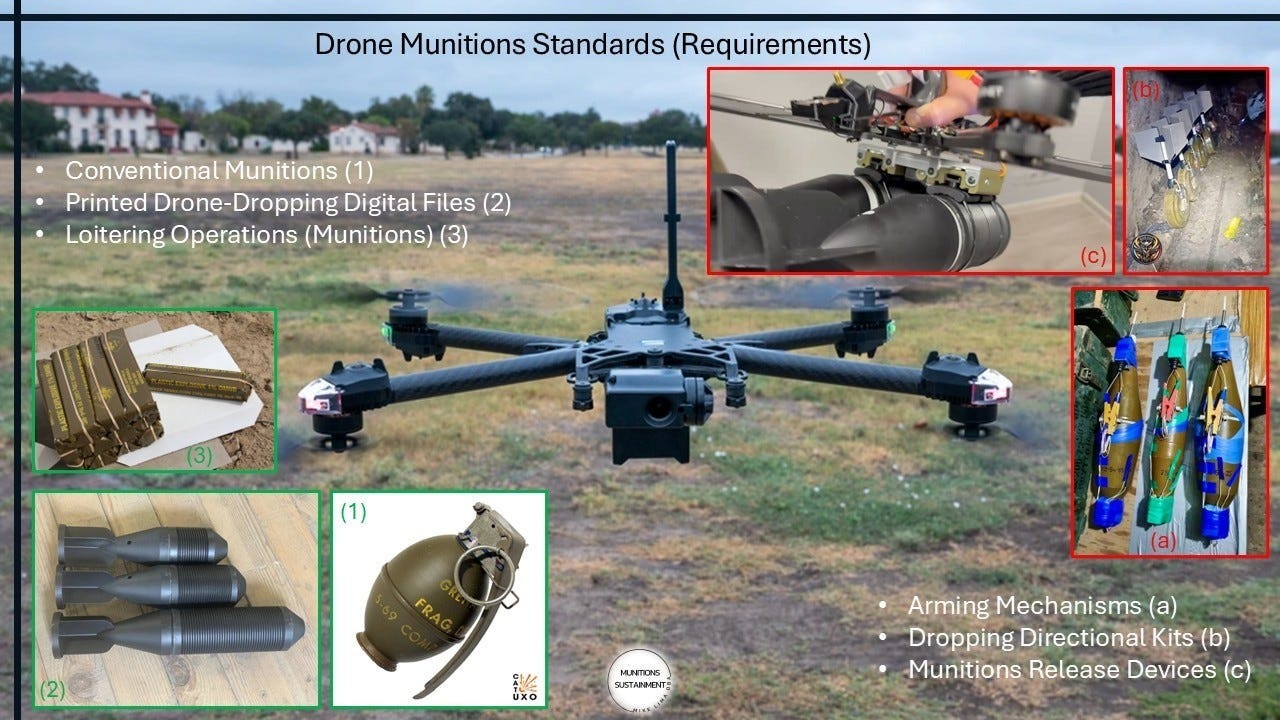
Now, I would like to direct your attention to the slide quickly. This slide provides a general overview of the key standards that are required. These are requirements for drone munitions, including loitering, drone-dropping, and drone-firing operations. Standards are necessary to ensure safety, accuracy, and effectiveness without compromising the ability to give warfighters a competitive edge in the fight, allowing them to be creative and innovative on the battlefield.
We can go from this to Standardization.
Slide 2
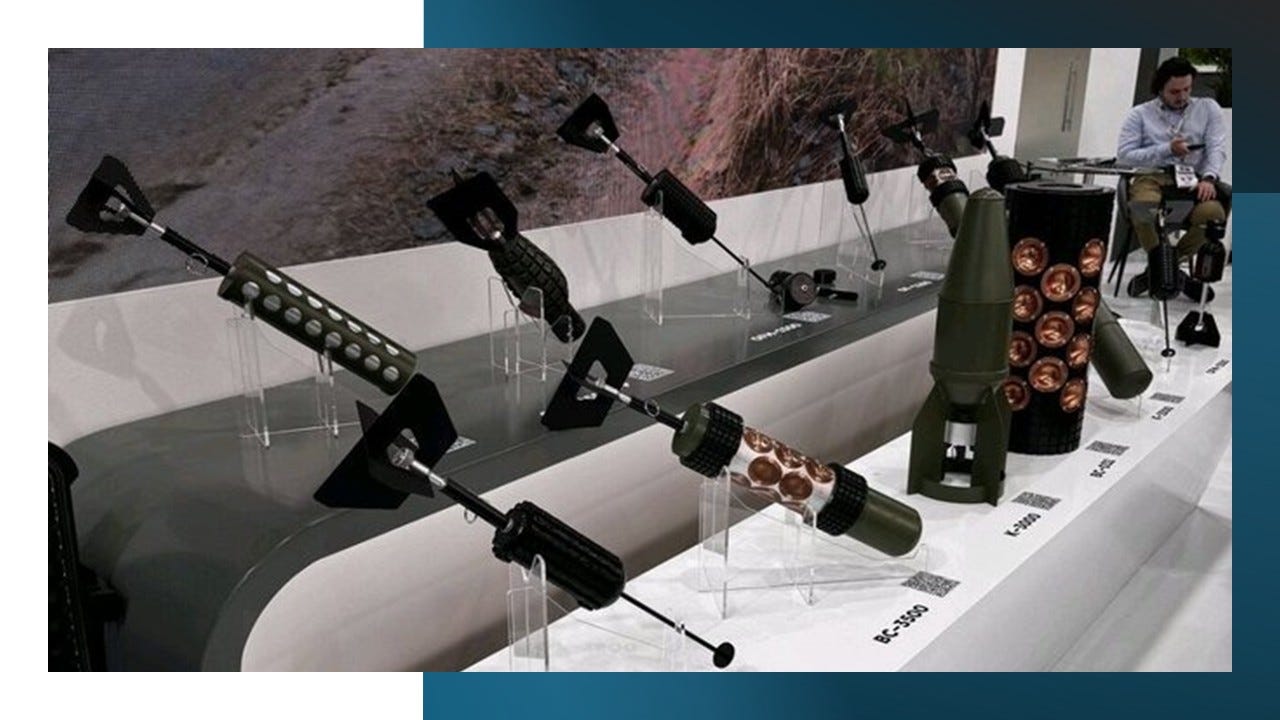
Showcased here in the International Defence Exhibition & Conference - IDEX 2025 highlighting new defense technologies, with Ukraine Export Company leading the way in standardized drone munitions.
Showing us that it can be done.
Thank you for your attention. And I would be pleased to take any questions.
Loitering Munitions USA
April 7 - April 8, 2025
USA
The Leading Forum for Military Education and Training on Loitering Munitions Programs
https://www.smgconferences.com/defence/northamerica/conference/loitering-munitions-usa
Thank you for the info; the discussion on loitering munitions is most informative. As an EOD person your discussion folds very nicely into expeditionary ammunition-explosive surety which includes safety, weapons and ammunition management and response for foreign ordnance and ammunition in sustained land combat operations. This includes Physical Security and Stockpile Management (PSSM). Again thanks.
Appreciate being informed on this.